Quick answer
Yes. Emergency staff are trained to check the wrist as one of the first steps when assessing someone who is unresponsive, which is why the wrist is a common place for a medical ID. A visible bracelet is one of the quickest ways for key information to be seen.
The short answer, as we understand it: emergency responders are trained to look for medical identification, and the wrist is one of the first places they check. This guide explains, in plain terms, how a medical alert bracelet is used in an emergency and why keeping the information simple matters.
- Responders tend to check the wrist first, then the neck and chest.
- The universal medical alert symbol signals at a glance that it's a medical ID.
- One clear fact is faster to read than a long list.
- A medical ID is identification, not treatment.
Where do responders look?
As we describe it at MediCarry, emergency staff are trained to check the wrist as one of the first steps when assessing someone who is unresponsive. After the wrist, they check the neck and chest, which is why a necklace is a useful alternative or addition. Put simply, a medical ID works because it sits where people are already looking.
The wrist is the first thing paramedics check.
How a medical ID helps
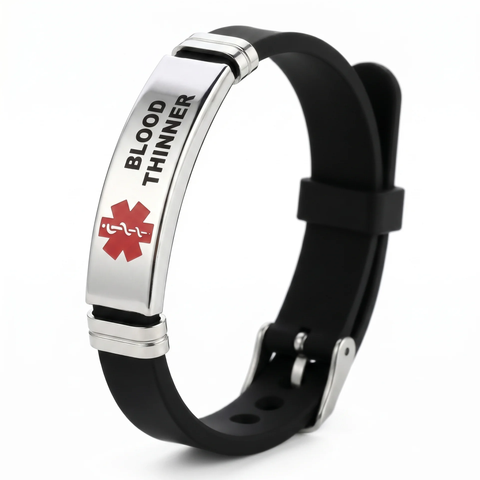
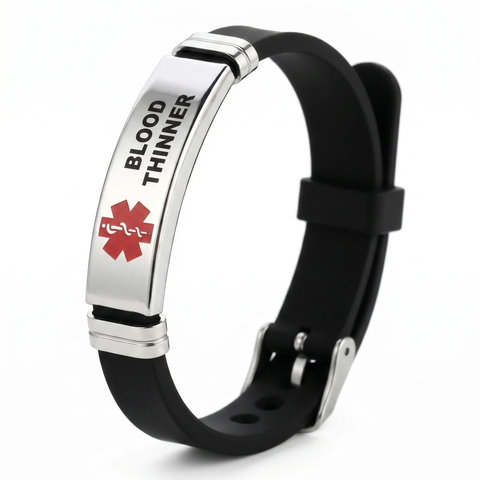
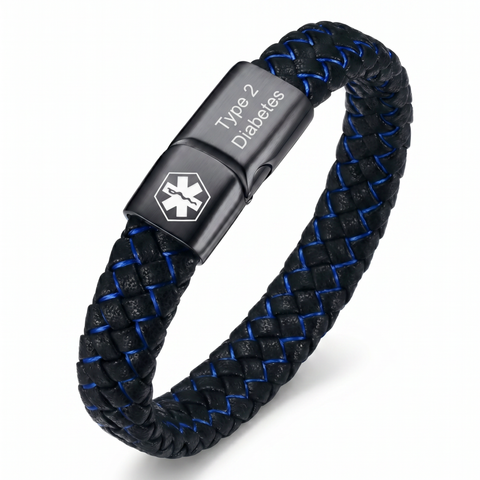
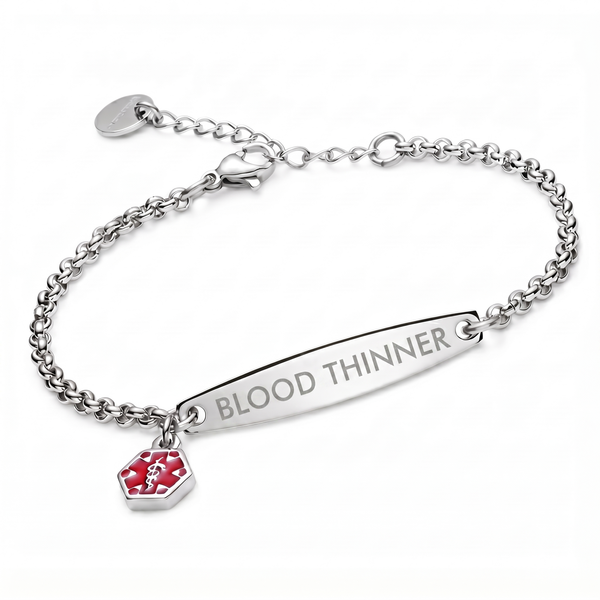
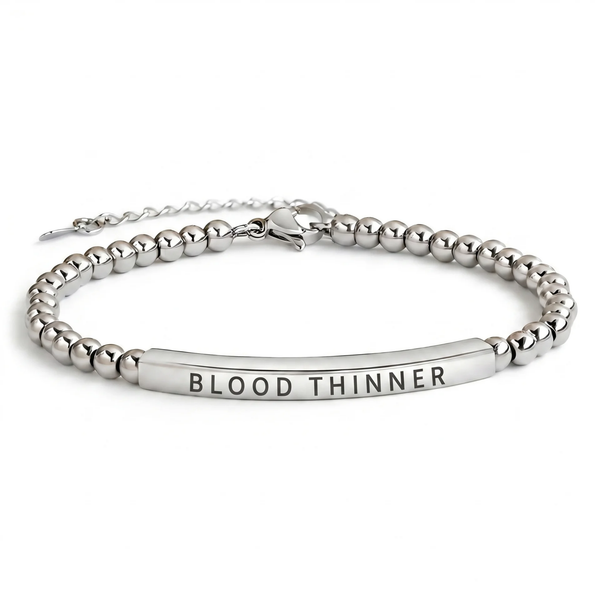
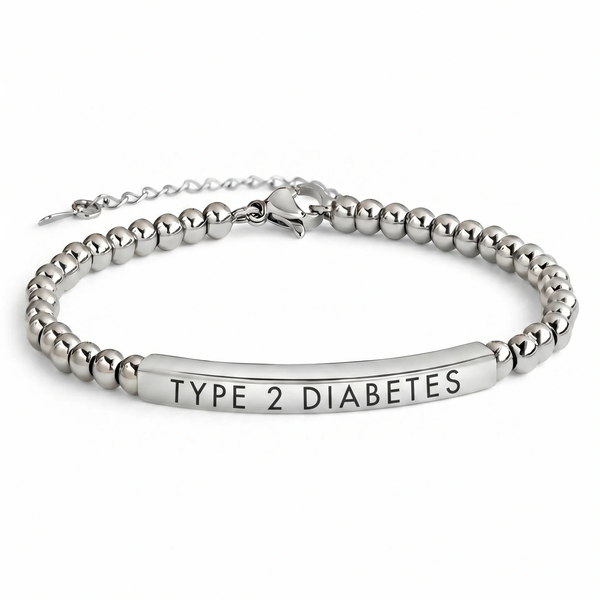
If you can't speak for yourself, a medical alert bracelet passes on the one fact that matters most, whether that's a medication like a blood thinner, a condition like diabetes or epilepsy, or a serious allergy. It's identification, not treatment: it doesn't monitor you or alert anyone automatically, and it doesn't replace telling medical staff what you take whenever you're able to.
What makes one easy to spot
Two things help a medical ID do its job quickly:
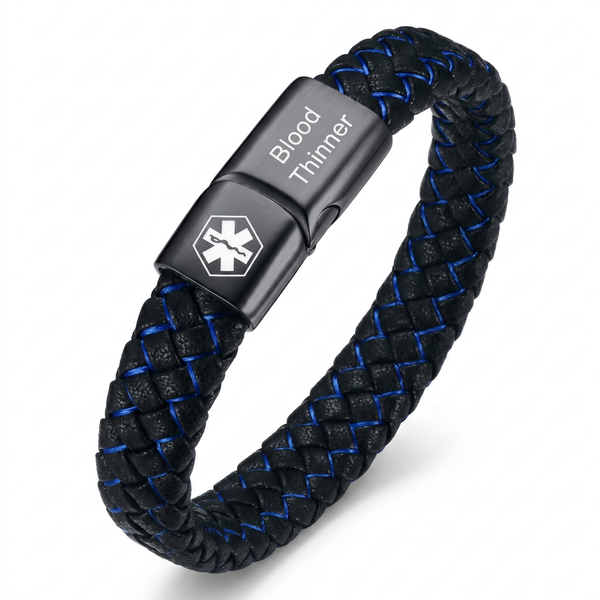
- The universal medical alert symbol on the reverse, which responders are trained to recognise.
- A short, clear line on the front, in capitals, rather than a paragraph. For more on this, see what a medical alert bracelet should say.
On MediCarry bracelets, the wording is set into the metal itself rather than surface-printed, so it stays legible with daily wear.
Bracelet or necklace?
Because responders check the wrist first, a bracelet is a natural choice, but a necklace shows up where they look next. Many people wear both. For a full comparison, see our guide on bracelet vs necklace.
Frequently asked questions
Do paramedics check for medical alert bracelets?+
As we understand it, emergency staff are trained to check the wrist as a first step when someone is unresponsive, then the neck and chest. A visible medical ID is one of the quickest ways for the right information to be seen.
Where should I wear a medical ID?+
On the wrist is a natural choice, since that's checked first. A necklace sits where responders look next, and a keychain is a discreet spare. The best option is the one you'll wear every day.
Is a medical alert bracelet a medical device?+
No. It's a medical alert identification product, not a medical device. It carries information; it doesn't monitor or treat you, and it doesn't replace telling medical staff what you take.