Quick answer
Both a bracelet and a necklace do the same job: displaying key medical information for an emergency team. Responders tend to check the wrist first, so a bracelet is a natural choice, while a necklace is a good alternative or addition. The best one is simply the one you'll wear every day.
Both a bracelet and a necklace do the same core job: they carry your key medical information where it can be seen. The best choice is the one you'll wear every day. This guide compares the two, plus the keychain option, so you can pick what fits your life.
- Responders tend to check the wrist first, so a bracelet is a natural choice.
- A necklace sits at the collarbone; after the wrist, emergency staff check the neck and chest.
- The capsule necklace unscrews to hold a written slip you can update yourself.
- Many people wear both: a bracelet for the headline fact, a capsule for fuller notes.
The bracelet
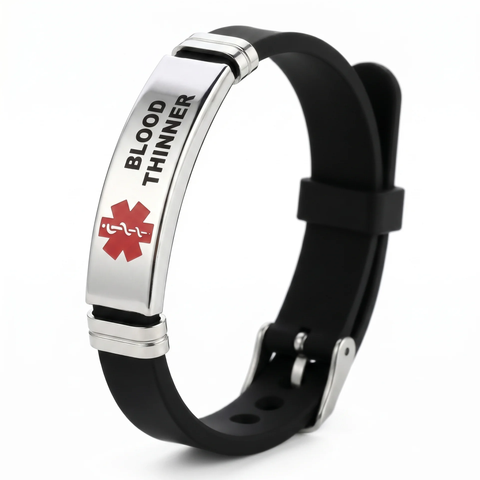
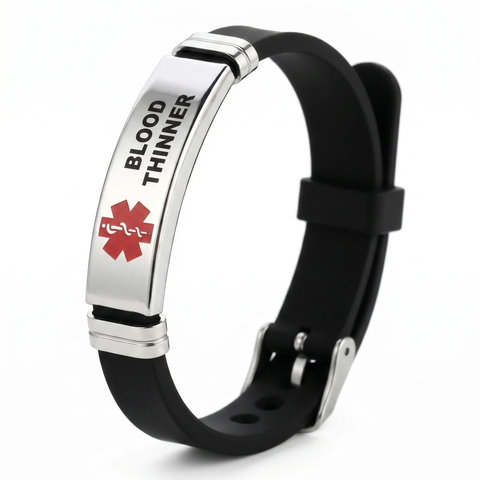
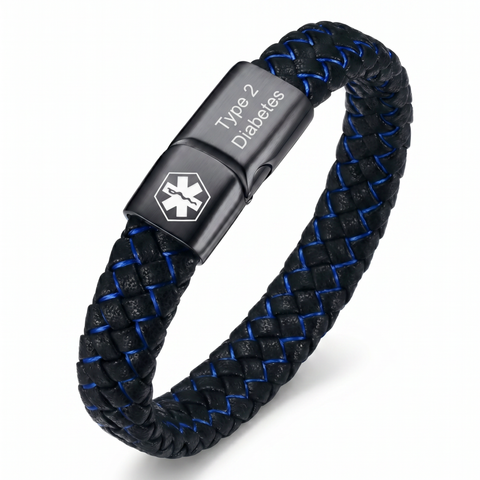
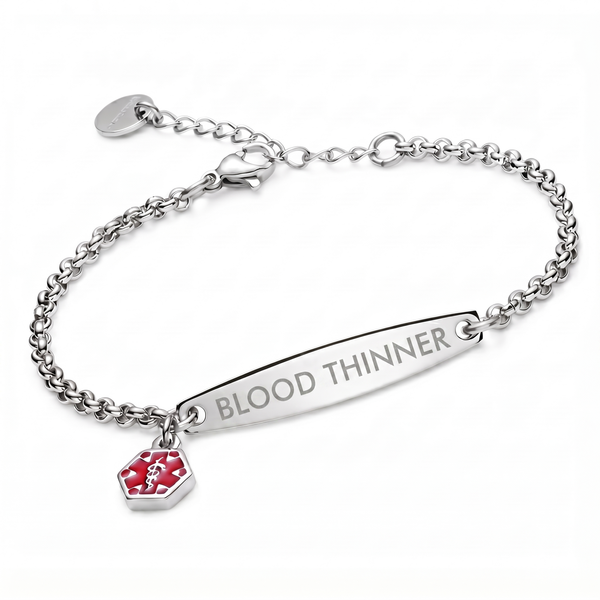
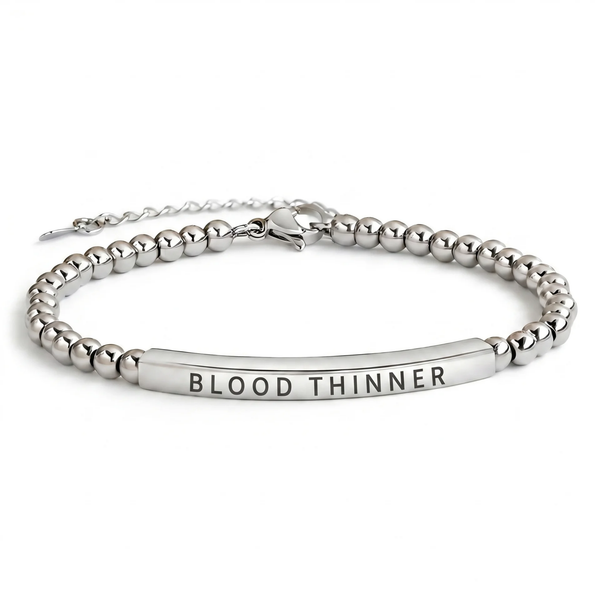
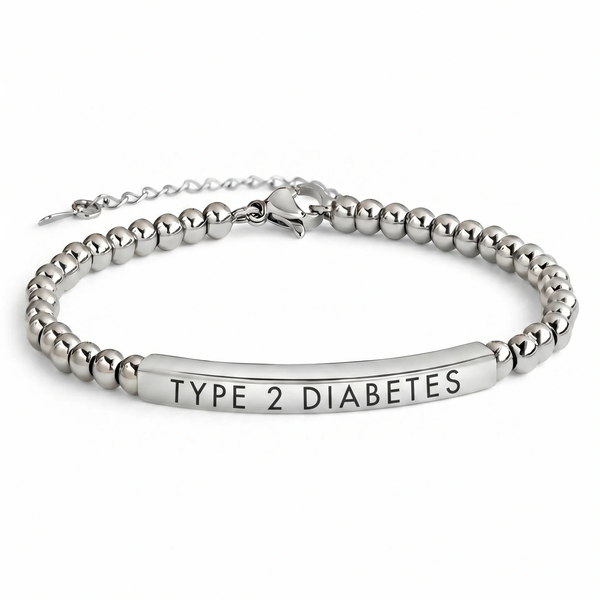
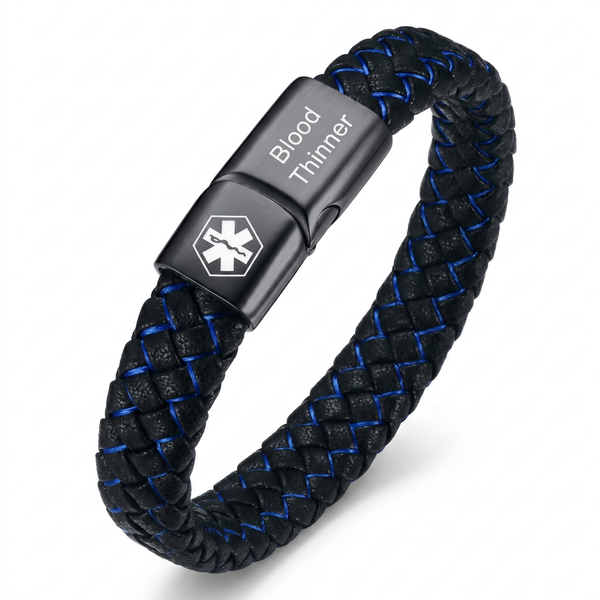
A medical alert bracelet is worn on the wrist, where responders tend to look first. As we describe it at MediCarry, emergency staff are trained to check the wrist as one of the first steps when assessing someone who is unresponsive, so a bracelet puts the information exactly where they already look.
The wrist is the first thing paramedics check.
Ours are fully adjustable, designed to look like everyday jewellery, with a clasp that clicks shut one-handed. There's a slim option for smaller wrists. Browse the bracelet collection.
The necklace
A medical alert necklace sits at the collarbone on an adjustable stainless-steel chain. It's a good alternative if you'd rather not wear something on your wrist, or a good addition alongside a bracelet. As we note for the capsule necklace, after the wrist, emergency staff check the neck and chest for a medical alert, so a necklace shows up where they look next.
Our capsule necklace goes a step further: the stainless steel capsule unscrews to hold a small slip you write yourself, with your conditions, medications, allergies and an emergency contact. You can update it any time things change.
The keychain
A keychain is a discreet option that travels with your keys or bag rather than on your body. It's popular as a spare or for people who prefer not to wear jewellery, though it isn't worn where responders check first, so many people use it alongside a bracelet rather than instead of one.
How to choose
- Want it where responders look first? Choose a bracelet.
- Prefer not to wear something on your wrist? A necklace is a natural fit.
- Need to record more than one fact? The capsule necklace holds a written slip you control.
- Want a spare or a discreet option? Add a keychain.
Whichever you choose, it's identification, not treatment, and doesn't replace telling medical staff what you take whenever you're able to. If it doesn't fit or isn't what you expected, you can return it within 30 days.
Frequently asked questions
Is a bracelet or a necklace better?+
Both do the same job. Responders tend to check the wrist first, so a bracelet is a natural choice; a necklace is a good alternative or addition. The best one is the one you'll wear every day.
Will paramedics find a necklace?+
After the wrist, emergency staff check the neck and chest for a medical alert, so a necklace shows up where they look next.
Can I write my own details on the necklace?+
Yes. The capsule necklace unscrews so you can add a slip with your conditions, medications, allergies and an emergency contact, and update it any time.
Can I wear both a bracelet and a necklace?+
Many people do. A bracelet carries the headline fact where responders look first, and a capsule necklace holds fuller notes you can update.