Quick answer
A penicillin allergy medical alert bracelet shows PENICILLIN ALLERGY on the front and the universal medical alert symbol on the reverse, so the information is visible if you can't speak for yourself. It's identification only and a personal choice.
A penicillin allergy medical alert bracelet carries one clear fact where an emergency team can see it: that you have a penicillin allergy. It's a personal choice, not a medical requirement. This guide covers what it shows and how to choose one.
- The front shows PENICILLIN ALLERGY in capitals; the reverse carries the universal medical alert symbol.
- It's identification only. It doesn't replace telling medical staff about your allergy.
- Choose the style you'll wear every day: standard, slim, women's, keychain or necklace.
Why people with a penicillin allergy wear one
If you're ever unable to speak for yourself, the people helping you can't know about your allergy unless something tells them. A visible medical ID passes that information on. As we describe it at MediCarry, emergency staff are trained to check the wrist as one of the first steps when assessing someone who is unresponsive, so a bracelet puts the information where they already look.
The wrist is the first thing paramedics check.
A bracelet is identification, not treatment. It doesn't alert anyone automatically. Whenever you're able to, always tell medical staff about your allergy and any medication you take. If you're not sure whether a medical ID is right for you, it's worth a conversation with your doctor.
What a penicillin allergy bracelet shows
- Front: the words PENICILLIN ALLERGY in capitals.
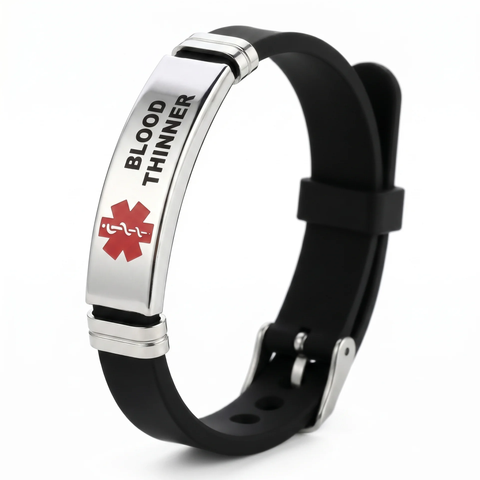
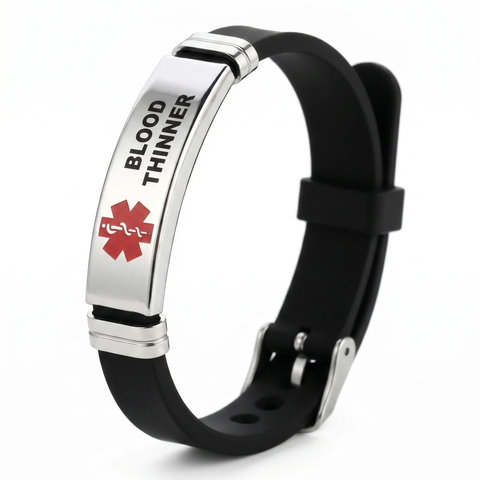
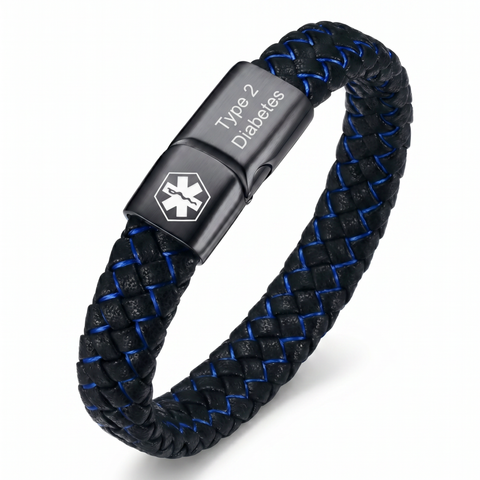
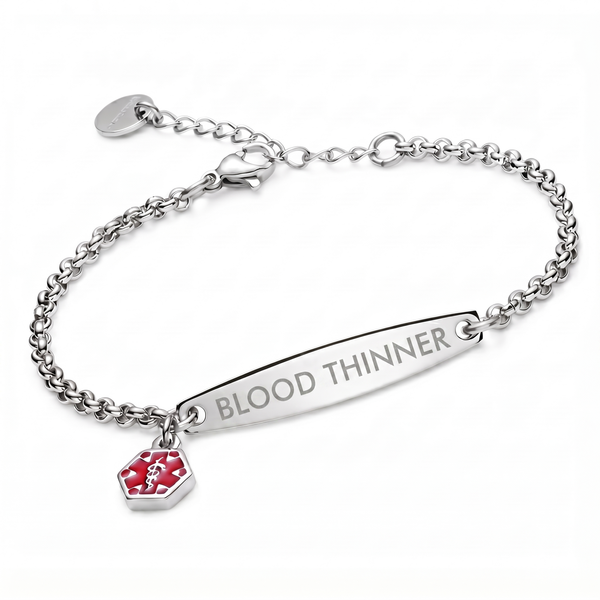
- Reverse: the universal medical alert symbol, so first responders recognise it instantly.
The wording is set into the metal itself rather than surface-printed, so it doesn't wear off with daily use. See the options in the penicillin allergy collection. To record more detail, such as other allergies, medications and an emergency contact, the capsule necklace holds a written slip you can update.
Choosing the right style
They all do the same core job. The best one is the one you'll wear consistently: a standard or slim bracelet, a women's style, a keychain that travels with your bag, or a necklace. Our bracelets are fully adjustable to fit most wrists, with a slim option for smaller wrists. If it doesn't fit, you can return it within 30 days. New to medical IDs? See our guide on whether you need a medical alert bracelet.
Caring for it
The metal parts are fine with water. Brief contact in the shower or rain is no problem; just towel it dry afterwards. Avoid prolonged submersion in chlorinated pools or salt water.
Frequently asked questions
What does a penicillin allergy bracelet say?+
The front shows PENICILLIN ALLERGY in capitals, and the reverse carries the universal medical alert symbol. The wording is set into the metal so it doesn't wear off.
Should I wear one if I'm allergic to penicillin?+
It's a personal choice, not a requirement. Many people with a penicillin allergy choose one so an emergency team can see it quickly if they can't speak for themselves. If you're unsure, ask your doctor.
Can I list more than one allergy?+
The bracelet carries the headline fact. If you'd like to record several allergies, medications and an emergency contact, the capsule necklace holds a written slip you can update any time.
Are the bracelets waterproof?+
The metal parts are fine with water. Brief contact in the shower or rain is no problem; just towel it dry. Avoid prolonged submersion in chlorinated pools or salt water.