Quick answer
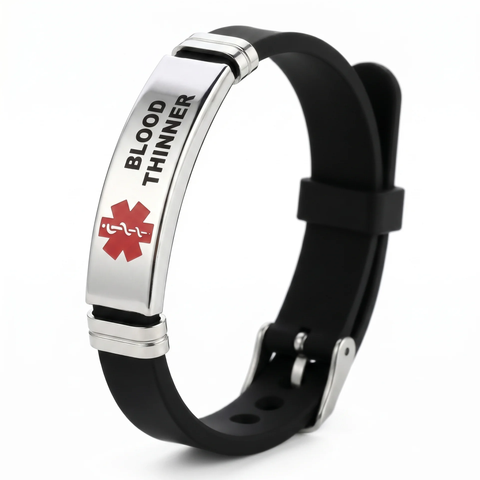
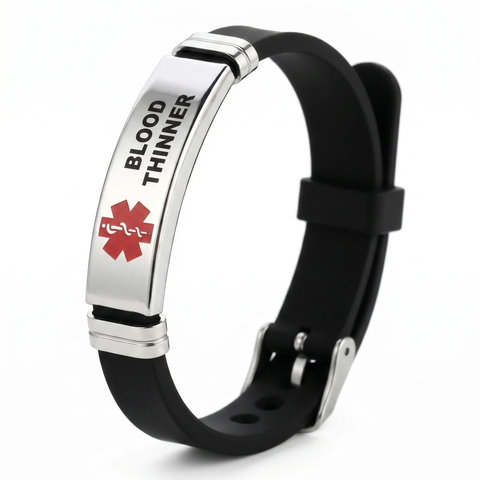
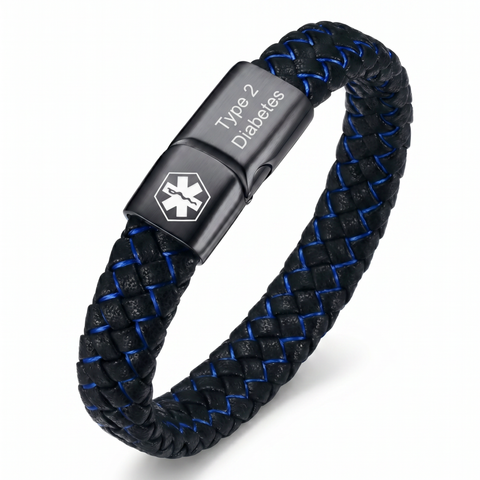
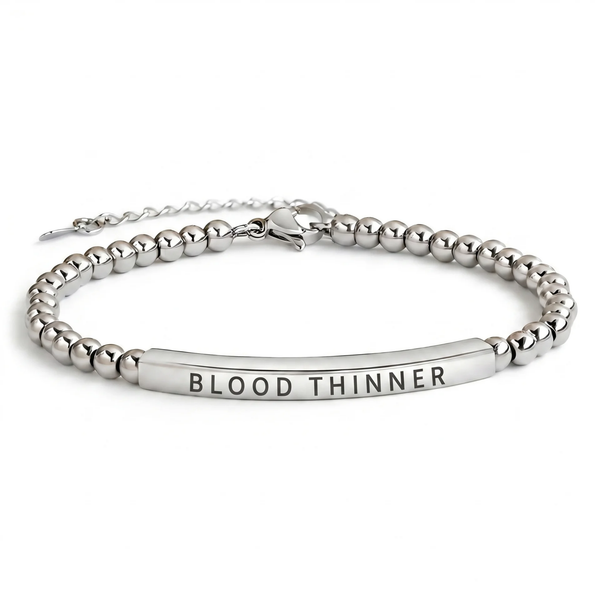
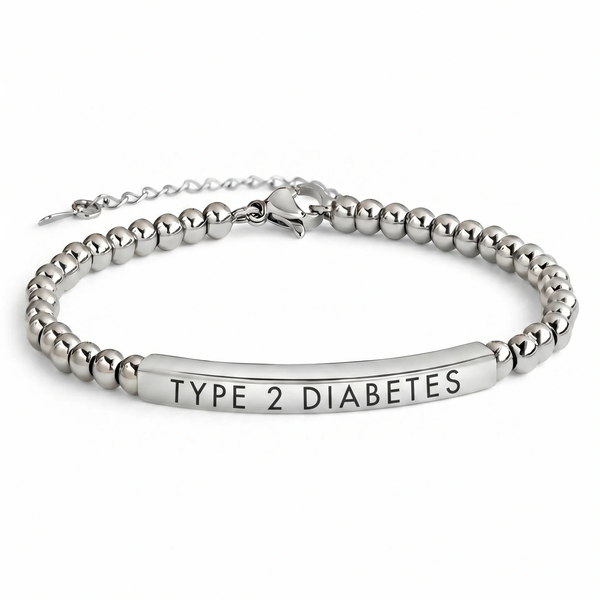
A diabetes medical alert bracelet typically shows 'Type 1 Diabetes' or 'Type 2 Diabetes' on the front and the universal medical alert symbol on the reverse. The main difference is simply which type you choose; both display the same core information so it's visible if you can't speak for yourself.
A diabetes medical alert bracelet carries one clear fact where an emergency team can see it: that you have diabetes, and which type. It's a personal choice, not a medical requirement. This guide explains what the bracelet shows, the difference between the Type 1 and Type 2 versions, and how to pick the right one.
- The bracelet shows “Type 1 Diabetes” or “Type 2 Diabetes” on the front, depending on which you choose.
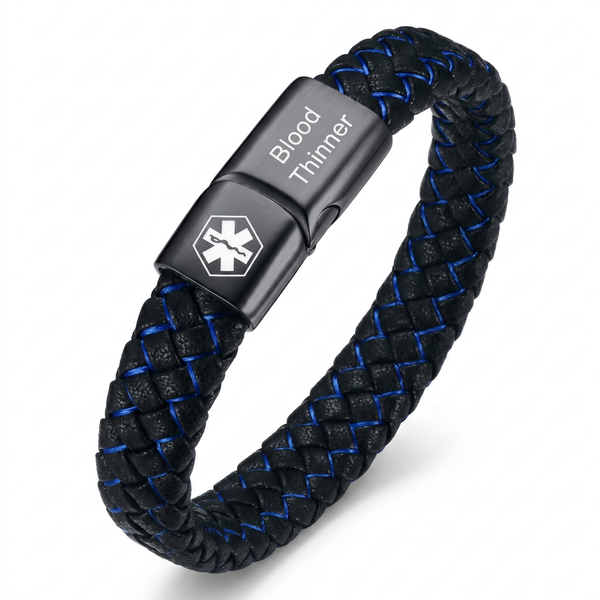
- The reverse carries the universal medical alert symbol.
- It shows your Type, not your specific medication.
- It's identification only. It doesn't monitor you or replace telling medical staff what you take.
What does a diabetes bracelet show?
On a MediCarry bracelet, the front shows “Type 1 Diabetes” or “Type 2 Diabetes” in line with the option you select, and the reverse carries the universal medical alert symbol so first responders recognise it instantly. The wording is set into the metal itself rather than surface-printed, so it doesn't wear off with daily use.
If you're ever unable to explain your condition yourself, the bracelet does it for you. As we describe it at MediCarry, emergency staff are trained to check the wrist as one of the first steps when assessing someone who is unresponsive, so it puts the information where they already look.
The wrist is the first thing paramedics check.
Type 1 vs Type 2: which should you choose?
Choose the version that matches your diagnosis. Both do exactly the same job; the only difference is the wording on the front, which reads either “Type 1 Diabetes” or “Type 2 Diabetes”. You can see both in the diabetes collection.
Does it show my medication?
The bracelet shows your Type, not the specific medication. Switches between oral, injection, and pump within the same Type are covered by the same bracelet. If your Type changes, you'll want a fresh bracelet for the new wording. If you'd like to record specific medications, allergies and an emergency contact that you can update over time, our capsule necklace unscrews to hold a small slip you write yourself.
Choosing the right style
They all do the same core job. The best one is the one you'll wear consistently.
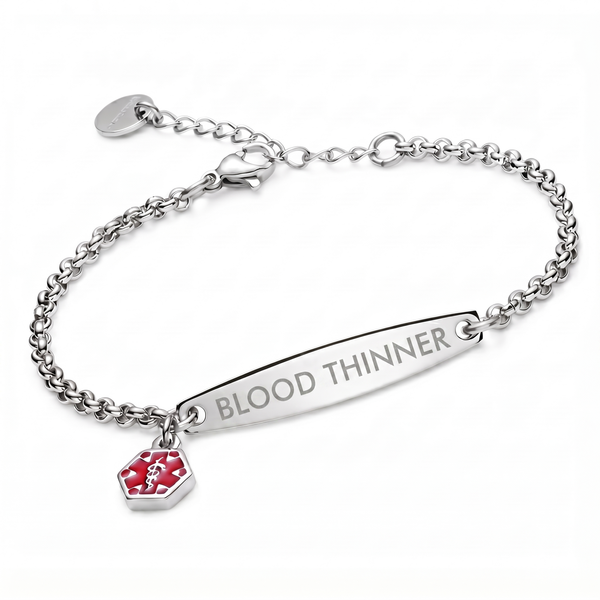
- Standard bracelet – the everyday option, fully adjustable, designed to look like jewellery.
- Slim bracelet – a lighter profile for smaller wrists.
- Women's bracelet – styled for a smaller wrist.
- Keychain – travels with your keys or bag rather than on your body.
- Necklace – sits at the collarbone; the capsule version holds a written slip.
Our bracelets are fully adjustable to fit most wrists, with a slim option for smaller wrists. If it doesn't fit, you can return it within 30 days.
Caring for it
The metal parts are fine with water. Brief contact in the shower or rain is no problem; just towel it dry afterwards. Avoid prolonged submersion in chlorinated pools or salt water.
Frequently asked questions
Does the bracelet say Type 1 or Type 2?+
It shows “Type 1 Diabetes” or “Type 2 Diabetes” on the front, depending on which you select. The reverse carries the universal medical alert symbol.
Does it show my specific medication?+
No. The bracelet shows your Type, not the medication. Switches between oral, injection, and pump within the same Type are covered by the same bracelet.
What if I switch from tablets to insulin?+
Changes between oral, injection and pump within the same Type are covered, so the same bracelet still applies. If your Type changes, you'll want a fresh bracelet for the new wording.
Can I record my medications and emergency contact?+
The bracelet shows your Type. If you'd like to carry your own notes, the capsule necklace unscrews to hold a slip with your conditions, medications, allergies and an emergency contact, which you can update any time.
Are diabetes bracelets waterproof?+
The metal parts are fine with water. Brief contact in the shower or rain is no problem; just towel it dry. Avoid prolonged submersion in chlorinated pools or salt water.